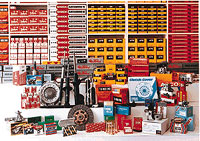
Row upon row of glittering shops in Dubai's fabled souks and mega-malls, stacked ceiling-high with the latest attractions from the world's leading consumer electronics manufacturers, present a sight that lures shoppers from around the globe. Electronics, alongside gold, has always been one of Dubai's greatest commercial attractions. The finest products from the best-known international brands are available here at what are, undoubtedly, some of the most competitive wholesale and retail prices in the world.
The electronics market has had a dynamic evolution in the Emirates. In the initial stages, domestic demand drove the importation of basic household appliances. As the trade gained sophistication, Dubai emerged as the undisputed re-export epicenter for the Middle East, the CIS (Confederation of Independent States), and the Indian sub-continent. However, as those markets matured and stabilized, a massive new wave of demand emerged: the African continent.
Today, African buyers have firmly established themselves as the premier bulk purchasers of consumer electronics and home appliances in Dubai. Capitalizing on Dubai's unmatched logistics and shipping infrastructure, African traders consolidate massive containers of high-demand goods—ranging from Smart TVs and smartphones to refrigerators and air conditioners—shipping them back to fast-growing consumer markets in East, West, and Central Africa.
Africa's' Consumer Electronics and Home Appliances Market
The African consumer electronics and home appliance sector is currently undergoing a massive digital and financial revolution, heavily driven by mobile technology. The integration of "Pay-As-You-Go" (PAYG) micro-financing platforms, linked directly to mobile money services like M-Pesa, has democratized access to premium electronics. Millions of African households that previously lacked the upfront capital can now comfortably afford solar-powered televisions, energy-efficient refrigerators, and smartphones. This financial innovation has caused retail volumes to skyrocket, prompting wholesale buyers in Dubai to dramatically increase their export orders to keep pace with the surging continental demand.
Concurrently, the implementation of the African Continental Free Trade Area (AfCFTA) is reshaping distribution networks. While Dubai remains the paramount global sourcing hub for the latest top-tier international brands from Asia and Europe, the AfCFTA has streamlined how these goods move once they land on African shores. Products arriving at major ports in Mombasa or Lagos can now move seamlessly across regional borders to landlocked nations with significantly reduced tariffs. This streamlined logistics chain allows African distributors to operate with higher margins and faster turnaround times, cementing Dubai's role as the indispensable primary supplier to a unified African market.

Top African Markets for Consumer Electronics
The Dubai Sourcing Advantage
There are several critical reasons why Dubai's electronics and home appliances market is incredibly attractive to African buyers. The city boasts a highly organized chain of global retailers and wholesalers, an impeccably efficient customs network, and massive, state-of-the-art warehousing facilities in free zones like Jebel Ali. Low import duties and direct supplies from global manufacturers keep Dubai's wholesale prices consistently 15-20 per cent lower than other regional markets.
As Dubai solidified its position as the ultimate marketplace for the Middle East and Africa, global electronics giants—including Sony, Samsung, LG, and Panasonic—shifted their regional operations directly into the UAE. By establishing massive assembly and distribution facilities within Dubai, these multinational corporations have optimized their ability to feed the high-consumption markets of Africa and the Indian sub-continent rapidly.
With the exponential rise of the African middle class, the demand for smart, energy-efficient home appliances and personal electronics will only continue to surge. The UAE, with its strategic location and unparalleled distribution network, stands perfectly positioned to reap rich dividends by catering to this historic economic expansion.
Did You Know?